Whole-house vs. under-sink for PFAS & lead: where treatment actually belongs
The most useful question in home water treatment isn't "which filter is best" — it's "where does the filter belong." The answer comes down to one idea: exposure route.
The one rule that decides location
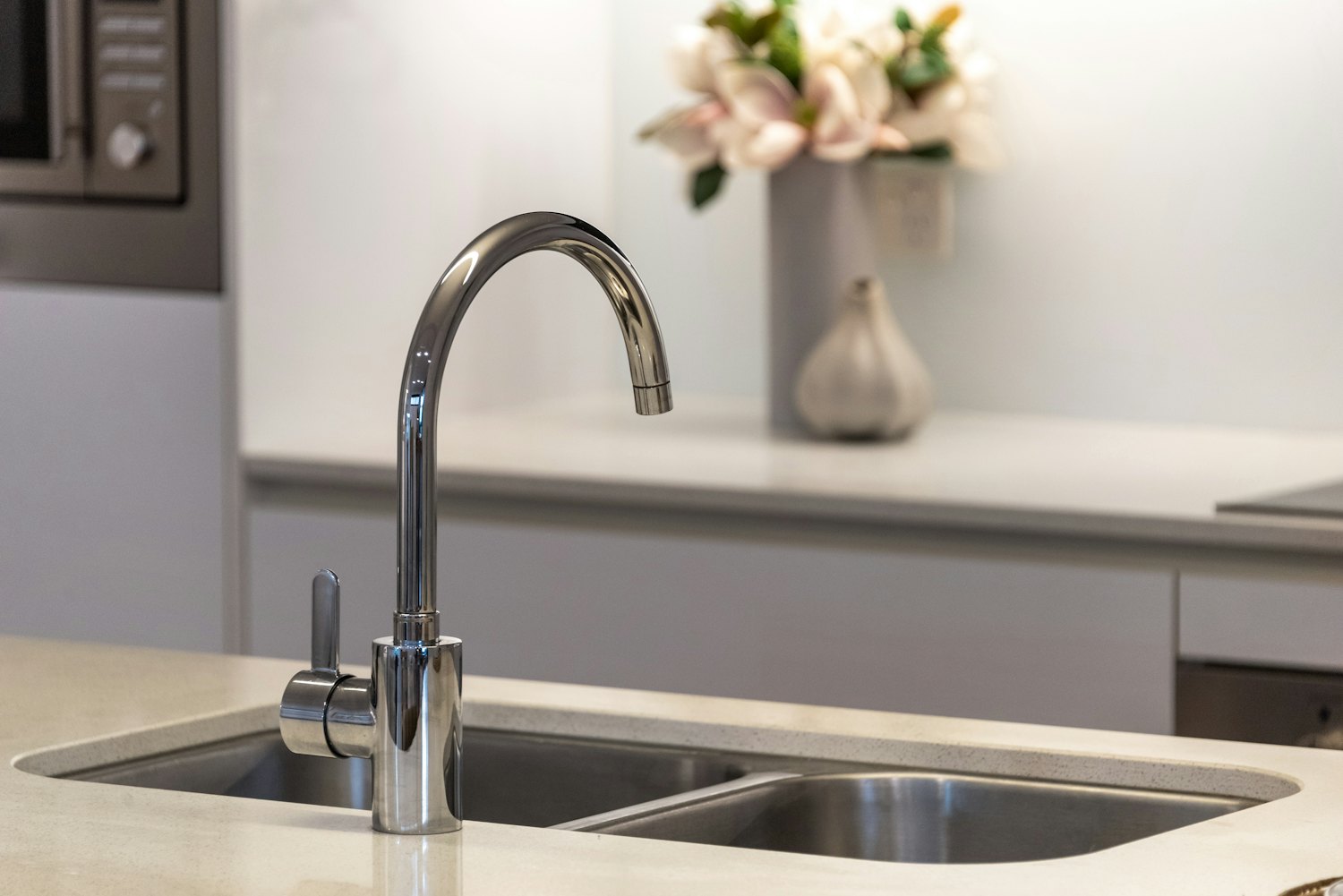
How a contaminant harms you determines where you treat it. If something harms you only when you ingest it — drink it or cook with it — then you only need to treat the water you actually drink. That's a job for a certified point-of-useTreatment at a single tap — such as under the kitchen sink — where you actually drink and cook. The practical fix for contaminants that only matter when ingested.Learn more → filter at the kitchen tap. If something affects your whole home — through inhalation in the shower, skin contact at every tap, or by scaling up your plumbing and appliances — then it belongs at the point of entry, where water comes into the house.
PFAS, lead, nitrate, arsenic → the drinking tap
These four are ingestion-route contaminants. Public-health agencies are consistent that bathing and showering in water containing PFAS“Forever chemicals” — synthetic compounds linked to health harm. Certified reduction today generally covers PFOA and PFOS specifically.Learn more → is unlikely to meaningfully raise your exposure, because very little passes through skin; nitrate is only a concern when swallowed; and arsenic is poorly absorbed through skin. Lead is a special case worth understanding: it usually enters water from the service line and your home's own pipes and fixtures — often downstream of where a whole-house unit would sit — which is exactly why treating at the tap you drink from is the reliable approach. In fact, there is currently no whole-houseTreatment installed where water enters the home, so every tap is covered. Best for aesthetic issues like chlorine; rarely necessary for ingestion-only contaminants.Learn more → system certified to remove lead.
Chlorine, hardness, sediment, iron, sulfur, well bacteria → the whole house
These genuinely affect the whole home. Chlorine and chloramine create taste, odor and shower-air exposure; hardness scales up water heaters and plumbing (an appliance issue, not a health one); iron and manganese stain every fixture; sulfur creates whole-home odor; and well bacteria require disinfecting all the water you use. These belong at the point of entry.

When "both" is the honest answer — and when it's overselling
Sometimes both are correct: a whole-house system for the scale/chlorine/staining across your home, plus a small under-sink RO at the kitchen tap for an ingestion-route contaminant the whole-house stage can't remove (a softener does nothing for PFAS, arsenic, nitrate or lead). But if your only issue is an ingestion-route contaminant, "both" is overselling — the under-sink filter alone is the right call.
Two honestly debated cases
We won't pretend everything is settled. Whole-house PFAS treatment works technically, but the health case for treating shower/skin exposure is weak — for health, point-of-use is sufficient, and whole-house PFAS is mostly peace-of-mind. And whole-house carbon for chlorine is best understood as comfort plus a plausible-but-contested modest health benefit, not a medical necessity.